
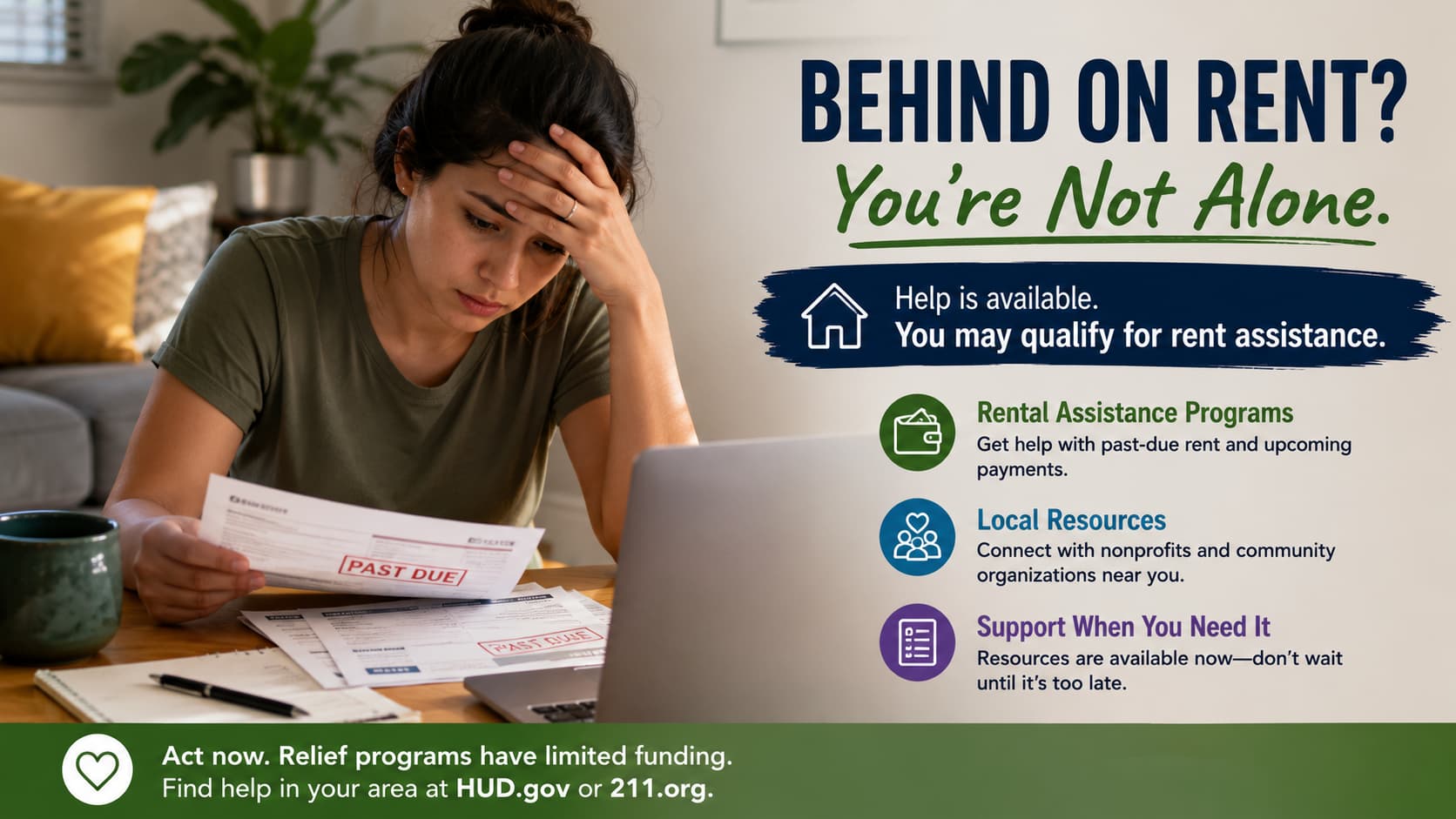
Falling behind on rent is one of the most stressful financial situations a household can face — and it happens faster than most people expect. One missed paycheck, an unexpected medical bill, or a reduction in hours can quickly put you in a position where you’re choosing between rent and other essentials. The good news is that real help exists, and more people qualify than typically apply.
Emergency Rental Assistance Programs
HUD-funded Emergency Rental Assistance (ERA) programs are administered at the state and local level. These programs can help cover past-due rent, upcoming rent payments, and in some cases utility costs that are part of a housing arrangement. Funds are available on a rolling basis in many jurisdictions, though availability changes as allocations are made.
To find a program near you, visit https://www.hud.gov/topics/rental_assistance or contact your local housing authority. Many counties also have 211 services that can connect you directly with a local ERA administrator. Find your local 211 resource center at https://www.211.org/.
Who Qualifies for Rent Assistance?
Eligibility requirements vary, but most programs look at:
– Household income (typically at or below 80% of area median income, though some programs serve those at lower thresholds) – A demonstrated financial hardship, such as job loss, reduced income, or unexpected expenses – Risk of housing instability or a documented past-due balance
You do not need to be in eviction proceedings to apply — many programs are designed to prevent that situation from ever reaching that point.
Nonprofit and Community Rental Assistance
Beyond government programs, organizations like the Salvation Army, Catholic Charities, local community action agencies, and United Way chapters often administer emergency rental funds. These programs tend to move quickly and may have fewer documentation requirements than federal programs.
Call 211 or visit https://www.211.org/ to find organizations in your area that provide direct rental assistance. You can also search for assistance through:
- United Way: https://www.unitedway.org/
- Salvation Army: https://www.salvationarmyusa.org/usn/
- Catholic Charities: https://www.catholiccharitiesusa.org/
What Documents You’ll Typically Need
Gathering documents in advance can speed up your application significantly. Most programs will ask for:
– A current lease agreement showing your name and address
– Proof of income for all household members (pay stubs, benefit letters, tax documents)
– A past-due notice or documentation showing rent owed
– Government-issued ID
– Social Security numbers for household members (for federally funded programs)
If you are already in eviction proceedings, include any court notices — this may qualify you for expedited review.
Act Before Your Situation Gets Worse
Rental assistance programs operate on limited funding cycles. In many areas, funds are available now but can close quickly once the allocation is exhausted. If you’re behind on rent or anticipate difficulty in the coming weeks, reviewing your options now — rather than waiting — significantly improves your chances of getting help. You can also review available federal, state, and local assistance programs through https://www.benefits.gov/.
Log in to your member portal to review the current rent relief programs available in your area and take the next step today.
Leave a Reply